Skip to Content

Knowledge Management

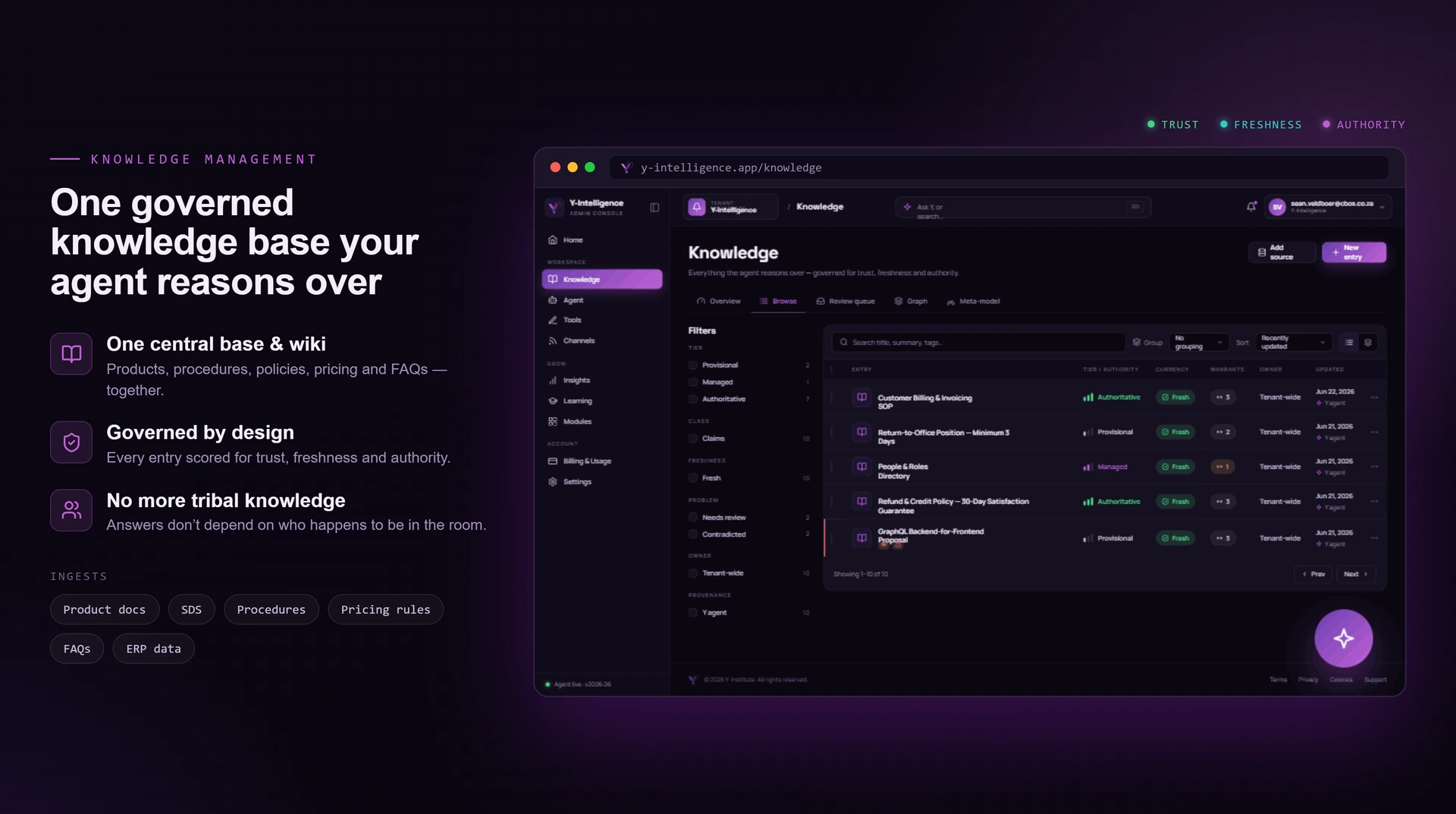
Knowledge Management is the foundation of Y Intelligence. It focuses on capturing, organising, governing, and making available the important knowledge that a business depends on every day.

This includes policies, procedures, product information, pricing logic, FAQs, customer support guidance, training material, system guides, operational processes, spreadsheets, internal documents, and the informal knowledge usually held by experienced staff.

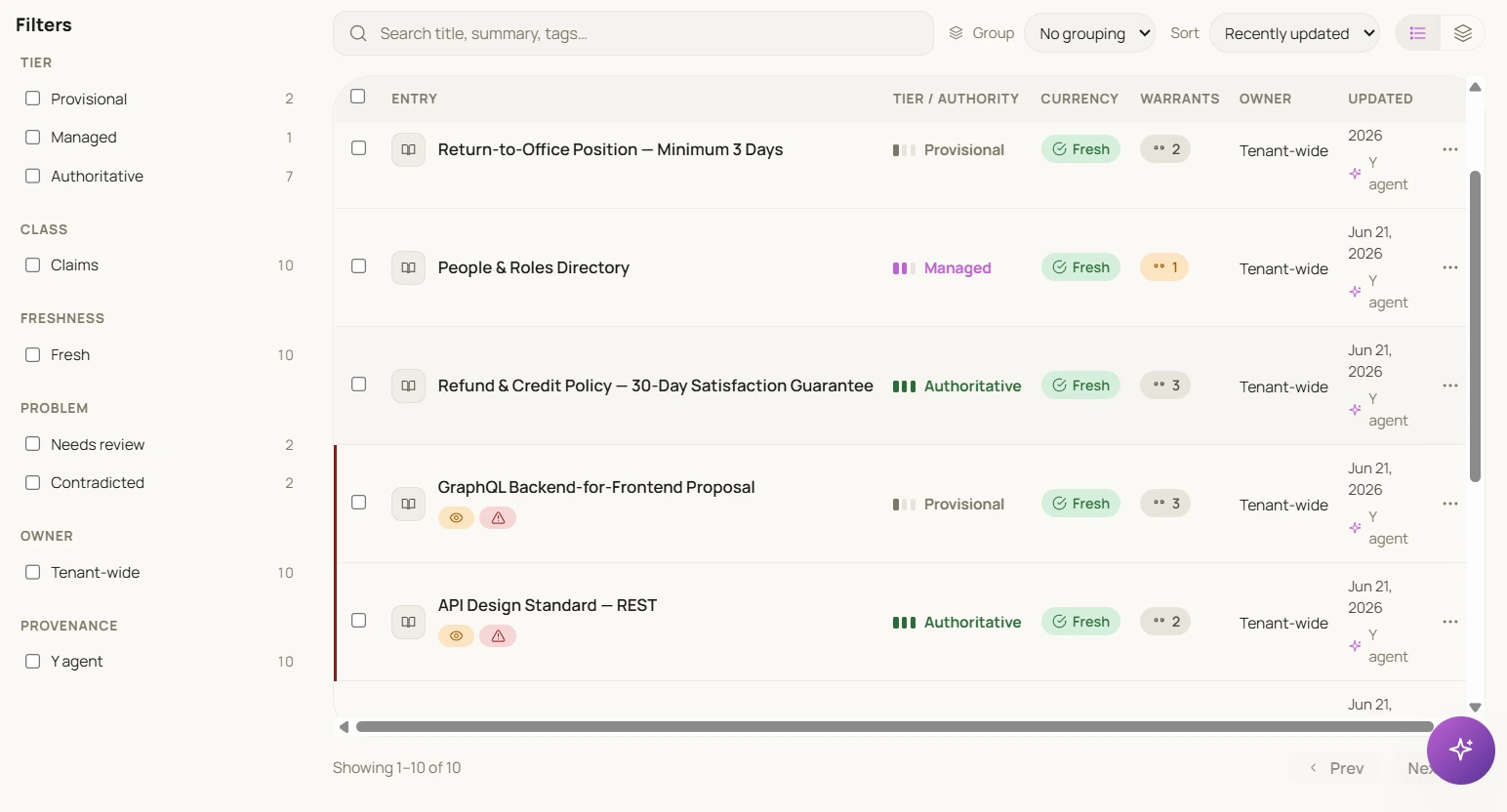
Y turns this scattered information into a structured, searchable, and governed knowledge base that can be accessed by the right people through simple questions.

Book a Demo 

Upload your policies, procedures, spreadsheets, FAQs, and internal documents, and Y helps structure them into a searchable knowledge base that users can query in plain language.

AI in Action
Knowledge Management

The Pain Point

Business knowledge is often scattered across people, documents, folders, spreadsheets, and disconnected systems.

In many organisations, knowledge does not live in one clear place.

It is often spread across shared folders, Excel files, email threads, PDFs, WhatsApp messages, old process documents, internal systems, and key employees who “just know” how things work.


This creates major problems:

  • Staff waste time searching for information.
  • New employees rely too heavily on senior people.
  • Customers get inconsistent answers.
  • Processes are followed differently across teams or branches.
  • Important knowledge is lost when people leave.
  • Teams duplicate work because they cannot find what already exists.
  • Decisions are made using outdated or incomplete information.
The real issue is not always that the business lacks knowledge. The issue is that the knowledge is difficult to find, difficult to trust, and difficult to apply consistently.

What Y Offers

Y creates a central source of truth that makes approved company knowledge easy to access.

Y Intelligence creates a central knowledge layer for the organisation.

It takes existing business information, whether it lives in documents, spreadsheets, shared drives, databases, or enterprise systems, and helps structure it into an approved source of truth.

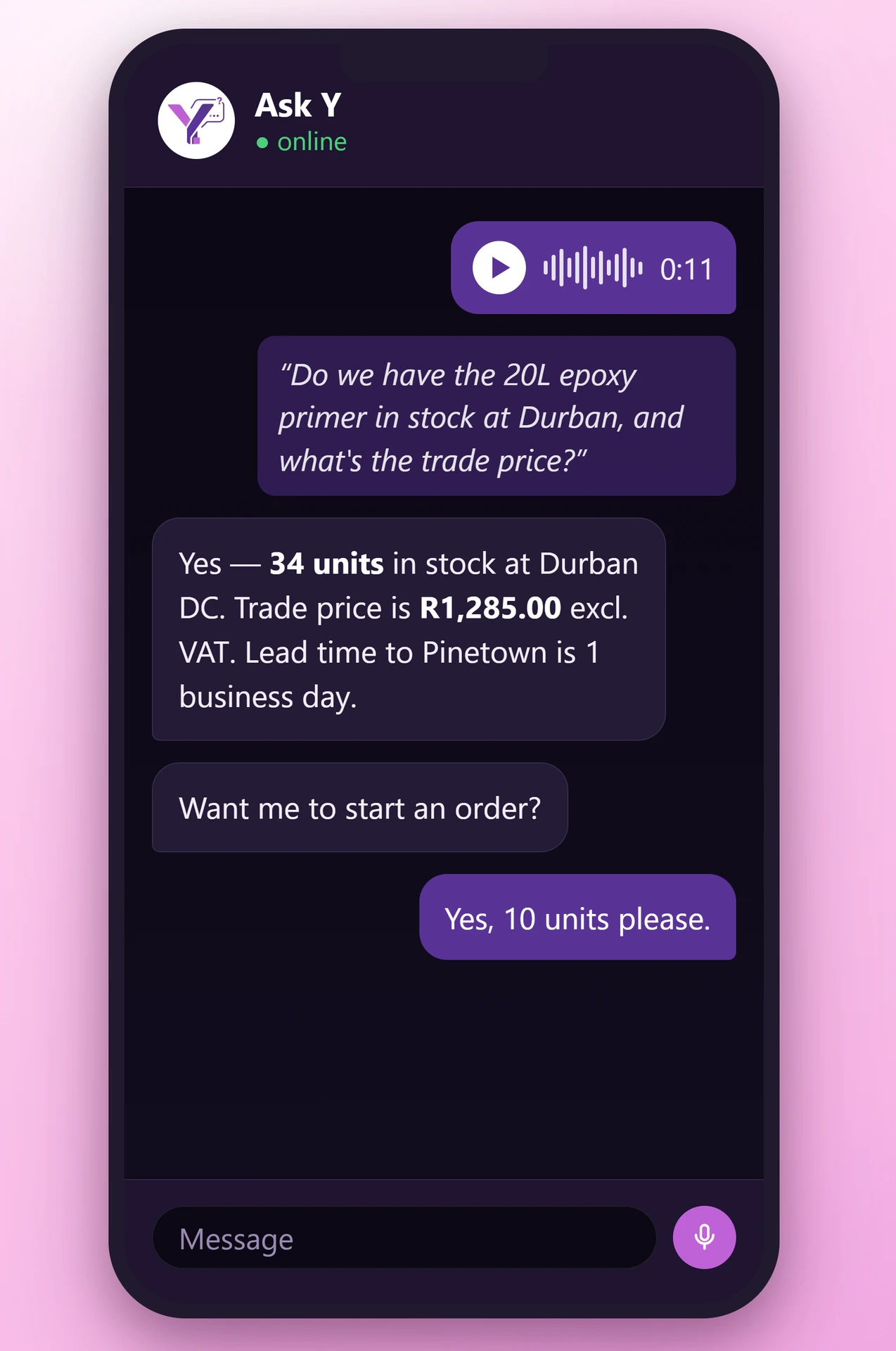
Once this knowledge is captured, users can ask Y questions in natural language and receive answers based on approved company information.

Y does not only store knowledge. It makes knowledge usable.

It helps the organisation move from:

“Ask John, he knows how it works.”

to:

“Ask Y, it has the approved answer.”

How it Works

Y ingests existing business information, structures it, and makes it searchable through natural questions.

Y can ingest and organise information from a range of sources, including:

  • Policies and procedures
  • Product documentation
  • Internal process guides
  • SOPs
  • Training material
  • Pricing documents
  • FAQs
  • Support scripts
  • Excel spreadsheets
  • Shared folders
  • CRM or ERP information
  • Operational documents
  • Meeting notes or internal guidance
This information can then be structured into knowledge areas, tagged by topic, linked to roles or departments, and made available through controlled access.

For example, a sales person may be able to access product and pricing guidance, while a support agent may access troubleshooting steps, and a manager may access reporting or escalation procedures.

Why it Matters

Teams get faster, more consistent answers without relying on one person who knows everything.


.

A structured knowledge base reduces the organisation’s dependency on informal knowledge.

Instead of staff asking around, searching old files, or waiting for someone senior to respond, they can access the right information quickly and consistently.

This improves:

  • Speed of response
  • Internal efficiency
  • Onboarding
  • Customer service
  • Process consistency
  • Knowledge retention
  • Decision-making
  • Operational resilience

The value becomes especially clear in businesses with multiple branches, departments, products, systems, or customer-facing teams.

Example Use Cases

Users can ask about policies, processes, products, support steps, pricing, or internal procedures.


“What is the correct process for handling a customer refund?”

Paul
Staff Member

Y responds with the approved refund process, including the required conditions, approval steps, and escalation route and offers to do it for the specific customer.


“What are the main differences between these two products?”

Jeremy
Sales Person

Y responds using approved product documentation, positioning notes, and internal sales guidance.


“How do I submit a leave request?”

Sipho
New Employee

Y provides the approved HR policy and the steps to follow and offers to do it for him.


“What should I do if a customer reports this issue?”

Jane
Support Agent

Y retrieves the relevant troubleshooting guide and suggests the next step.


“Where is the latest version of the branch onboarding process?”

Buhle
Manager

Y returns the approved version instead of leaving the manager to search through folders and outdated files.

Business Impact

Y reduces repeated questions, protects knowledge, improves onboarding, and strengthens operational consistency.

Knowledge Management delivers value because it reduces the friction between people and the information they need.

It helps businesses:


  • Reduce repeated questions
  • Protect critical internal knowledge
  • Shorten onboarding time
  • Improve customer-facing consistency
  • Reduce reliance on key individuals
  • Standardise how processes are followed
  • Make internal information easier to maintain and update
  • Create a stronger foundation for automation and AI-assisted workflows
This is one of the most important parts of Y because the quality of every AI response, workflow, training journey, and system interaction depends on the quality of the knowledge behind it.

Website Positioning

Y turns scattered business knowledge into a governed intelligence layer for the whole organisation.

Knowledge Management gives your organisation one governed source of truth. Y captures scattered business knowledge, structures it, and makes it easy for staff, customers, and partners to access the right information when they need it.

Whether that knowledge currently lives in Excel spreadsheets, shared folders, PDFs, emails, internal documents, or enterprise systems, Y helps turn it into a usable business intelligence layer.

Ready to bring your digital vision to life?

Let's collaborate to create innovative solutions that stand out in the digital landscape. Reach out today and let's build something extraordinary together.