Skip to Content

AI-Assisted Retrieval

AI-Assisted Retrieval is the ability to ask questions in natural language and receive accurate, context-aware answers from approved business information.

Instead of requiring users to know where a document is stored, which system to open, which spreadsheet to check, or who to ask, Y allows them to ask a question the way they would ask a colleague.

This means users can retrieve relevant information from policies, procedures, product documents, FAQs, spreadsheets, internal knowledge bases, and connected systems without needing to manually search through multiple locations.

AI-Assisted Retrieval is not just a chatbot giving general answers. It is a governed retrieval layer.

Book a Demo 

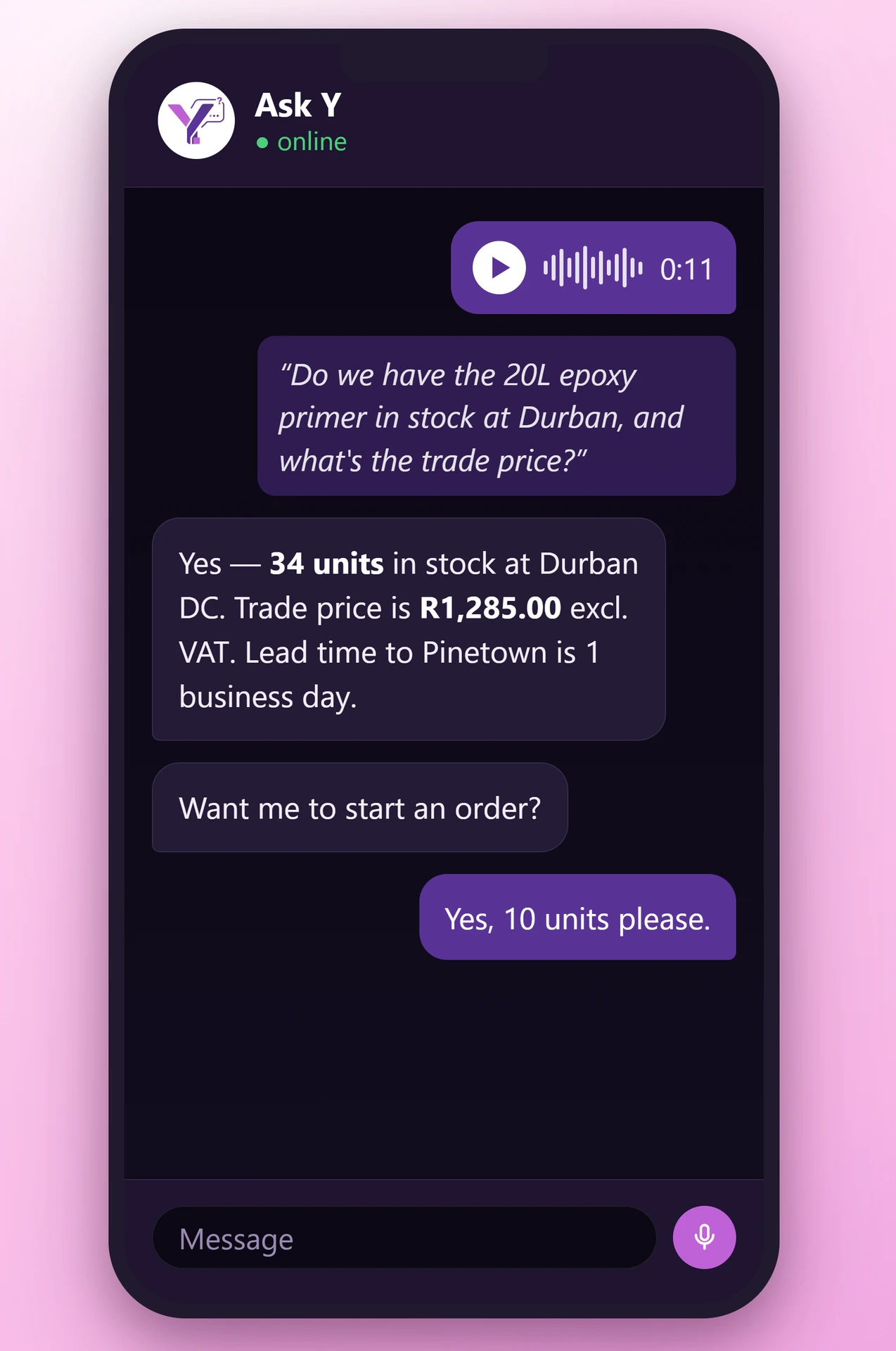
A user asks Y a question in plain language, and Y searches approved company knowledge and connected systems to return a clear, context-aware answer without the user needing to know where the information lives.

AI in Action
AI-Assisted Retrieval

The Pain Point

Information often exists, but it is difficult to find quickly, confidently, and consistently.

In many organisations, the information people need already exists, but it is difficult to find.

Staff may need to search through shared drives, old emails, PDFs, spreadsheets, intranet pages, CRM notes, ERP records, or ask someone senior who knows where the answer sits.


This creates major problems:

  • Staff waste time looking for information.
  • Customers wait longer for answers.
  • Teams escalate questions unnecessarily.
  • People rely on outdated or unofficial documents.
  • Different departments give different answers.
  • New employees struggle to find what they need.
  • Managers and senior staff become constant points of dependency.
  • Operational decisions are delayed because information is not easily accessible.
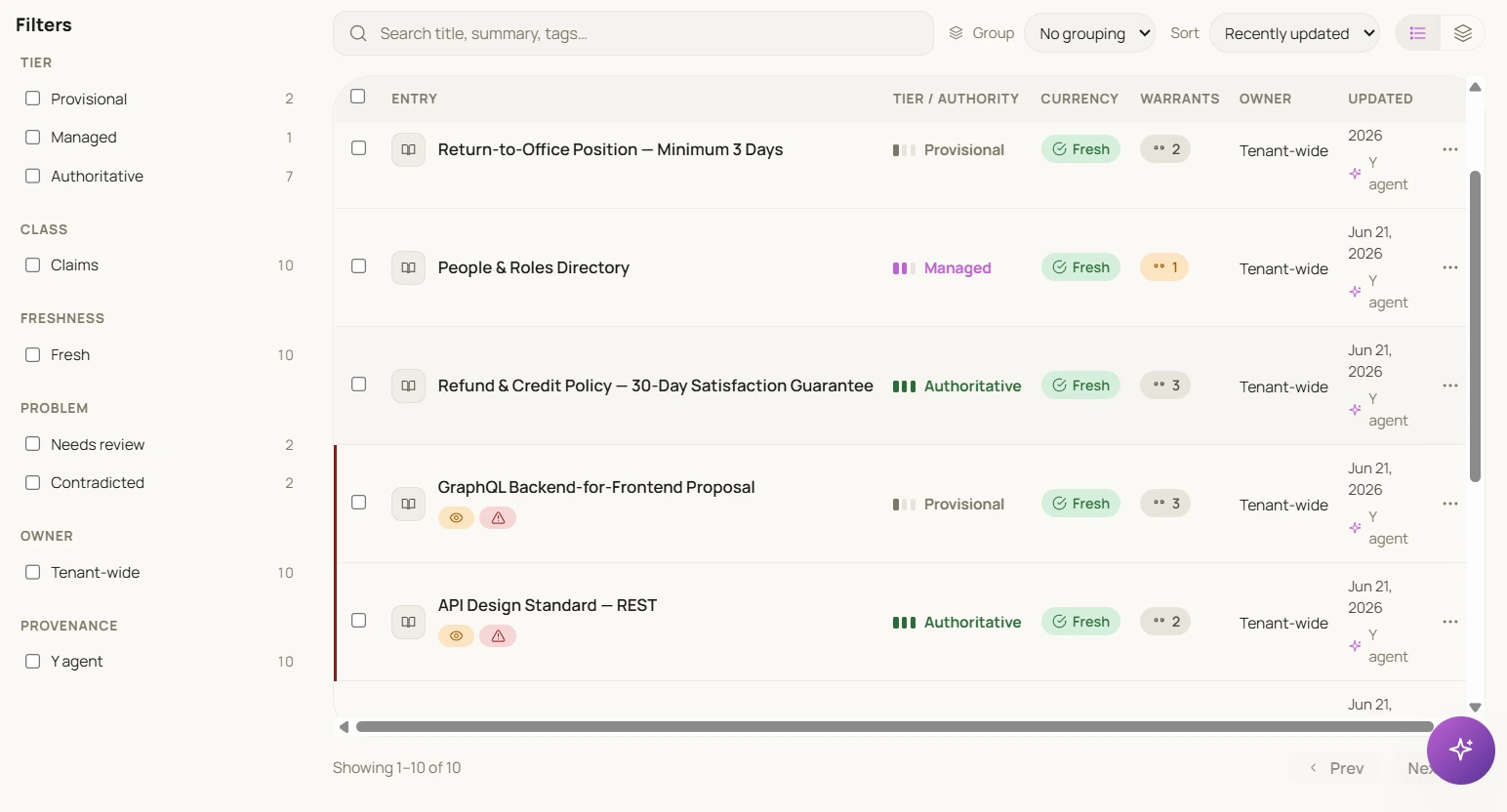
The problem is not always a lack of information. The problem is that information is trapped in places people cannot access quickly, confidently, or consistently.

What Y Offers

Y gives users a simple way to retrieve approved answers from company knowledge and connected systems.

Y Intelligence gives users a simple way to ask questions and retrieve approved answers from company knowledge and connected business systems.

A user can ask something like:

“What is the correct process for handling a customer refund?”

“Do we have stock available for this item?”

“What is the latest pricing rule for this customer type?”

“What does the policy say about remote work?”

Y then searches the relevant approved sources and returns a clear, practical answer. Where needed, it can also include supporting context, source references, next steps, or escalation guidance.

This allows the organisation to move from manual searching and informal asking around to instant, governed access to information.

The value is that users no longer need to know where the information lives. They only need to know what they want to ask.

How it Works

Y interprets the question, searches approved sources, and returns relevant answers based on user access.

Y can retrieve information from a range of approved sources, including:

  • Policies and procedures
  • Product documentation
  • FAQs
  • SOPs
  • Training material
  • Internal knowledge bases
  • Excel spreadsheets
  • Shared folders
  • CRM information
  • ERP information
  • Customer records
  • Pricing documents
  • Stock data
  • Support notes
  • Operational reports

When a user asks a question, Y interprets the intent, searches the relevant knowledge sources, and returns an answer based on the information it is allowed to access.

This can be delivered through familiar channels such as WhatsApp, Microsoft Teams, Email, Web Chat, or existing business portals.

Access can also be controlled by role, department, location, customer type, or user permissions. This means a sales person, support agent, manager, partner, or customer can each receive answers appropriate to what they are allowed to see.

Why it Matters

People get the information they need faster, without searching, waiting, or escalating unnecessarily.


.

AI-Assisted Retrieval removes the friction between people and the information they need.

Instead of wasting time searching, waiting, or escalating, users can get answers quickly and continue with the task in front of them.

This improves:

  • Response times
  • Customer experience
  • Internal productivity
  • Decision-making
  • Sales confidence
  • Support quality
  • Onboarding speed
  • Process consistency
  • Knowledge accessibility

It is especially valuable in businesses where information is spread across many documents, systems, departments, branches, or customer-facing teams.


Example Use Cases

Users can ask about orders, stock, pricing, policies, processes, products, support, or customer records.


“What is the status of this customer’s order?”

Angela
Customer Service Agent

Y retrieves the latest order information from the available source and provides a clear response that can be used immediately.


“What product should I recommend for this customer’s requirement?”

Jim
Sales Person

Y uses approved product information, positioning notes, pricing rules, and relevant context to suggest the most suitable option.


“What is the correct process for escalating this issue?”

Siphiwe
Staff Member

Y returns the approved escalation route, required information, and next step.


“What are the most common support questions this month?”

Thandiwe
Manager

Y can help surface recurring themes from available records or connected reporting sources.


“How do I complete this internal process?”

Jonothan
New Employee

Y provides the relevant steps, documents, links, or guidance without the employee needing to search through folders or ask a senior staff member.


“What is our least efficient branch?”

Rob
CEO

Y returns the least efficient branch based on the current live information and markers gathered between each of the companies branches.

Business Impact

Y reduces repeated questions, improves response times, and makes business knowledge easier to use.

AI-Assisted Retrieval creates value by reducing the time and effort required to find and apply information.

It helps businesses:


  • Reduce repeated questions
  • Decrease unnecessary escalations
  • Improve speed of response
  • Support staff with better guidance
  • Reduce dependency on key individuals
  • Ensure answers are based on approved sources
  • Improve consistency across teams and channels
  • Make existing business knowledge easier to use
  • Improve customer and partner experience
This capability is powerful because it turns company information into something people can actually interact with. Instead of knowledge sitting passively in files, spreadsheets, and systems, Y makes it available at the point of need.

Website Positioning

Ask Y in plain language and get approved answers without needing to know where to look.

AI-Assisted Retrieval lets people ask Y questions in plain language and receive approved, context-aware answers from your business knowledge and connected systems.

Whether the information sits in documents, spreadsheets, shared folders, CRM records, ERP data, or internal knowledge bases, Y helps users find the right answer without needing to know where to look.